
Oconee County Arrest Records and Court Charges
Oconee County arrest records begin with law enforcement. They may involve the Sheriff's Office, jail operations, an incident report, a booking record, a warrant, or a current-custody entry. Court charges after arrest begin when a charge is filed in a court case. That court charge record may be based on a warrant, accusation, indictment, citation, or other charging document. The two records can describe the same event, but they answer different questions.
The Sheriff's Office is led by Sheriff James A. Hale Jr. and operates outside the courthouse at Experiment Station Road. The Clerk of Superior, Magistrate, and Juvenile Courts handles court files at the courthouse. The Western Judicial Circuit District Attorney reviews and prosecutes felony matters in Superior Court. For custody and booking detail, the inmate roster is the better source. For the full court file and outcome, use Oconee County criminal court records.
The official biography for Sheriff James A. Hale Jr. confirms the local sheriff source behind many arrest-related channels.
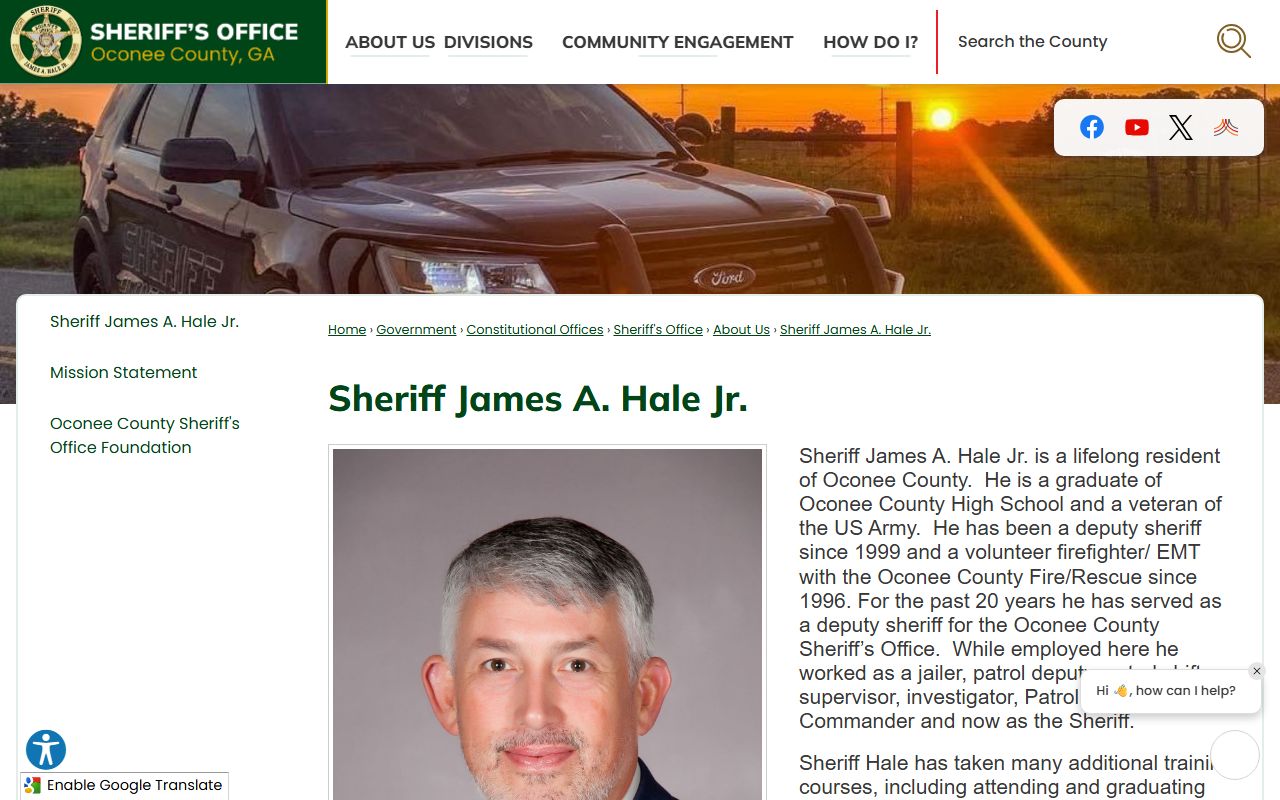
That sheriff source helps identify the law-enforcement side, while the Clerk and courts identify the filed charges and outcomes.
Find Oconee County Arrest Records
There is no single official Oconee page that combines every arrest record, booking detail, filed charge, and final disposition. Use a channel chain. For current custody, start with the county Current Inmates page and the embedded JailTracker/Public Safety Cloud roster when it loads. For sheriff reports, use the OCSO open records process. For filed charges, search the Superior and Magistrate Court docket portal. For prosecuted felony status after an arrest, the Sheriff's FAQ says to contact the District Attorney.
- Check whether the person is currently in custody through the county inmate channel or jail operations.
- Search the Oconee Superior and Magistrate docket portal by defendant name or exact case number.
- Read the charge entries and compare them with disposition or sentence entries.
- Use the Sheriff's open records form for arrest reports or incident records held by OCSO.
- Call the court or DA channel when the arrest has occurred but the filed charge or status is unclear.
- Use state systems only for state prison, sex offender, or criminal-history context, not as a replacement for the court file.
The Sheriff's Office staff directory lists administration, investigations, jail operations, court services, patrol, training, and school-resource contacts.
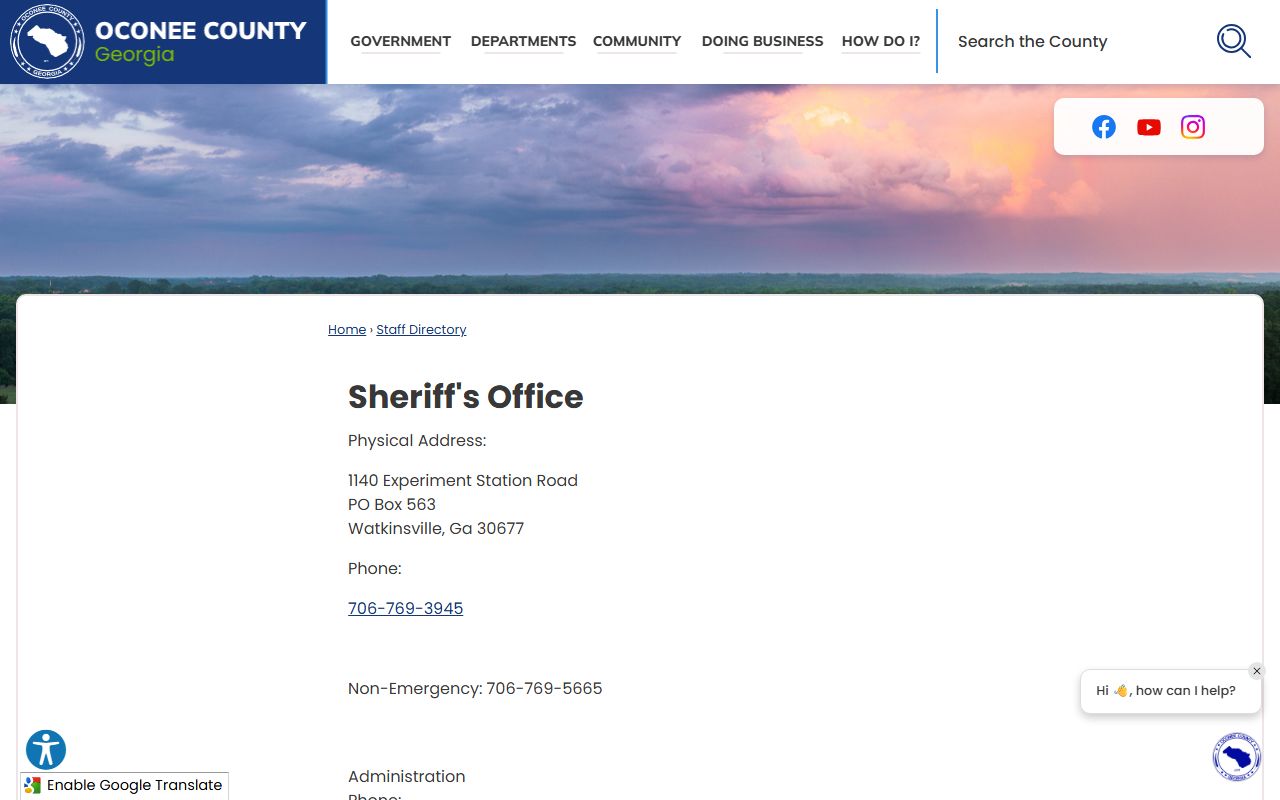
The directory supports the fallback chain when a court charge has not yet appeared in the public case index.
Charges After Arrest Documents
Charges after arrest become court charge records through a charging document or court filing. In Georgia criminal practice, felony matters often move through the District Attorney and Superior Court. Magistrate Court can handle warrant applications, first appearances, preliminary hearings, and special bond hearings. Probate and Municipal Court can handle certain lower-level citation or misdemeanor matters. The name of the document matters less than the function: it states what offense is being pursued in court.
| Document | Who Uses It | What It Does |
|---|---|---|
| Complaint or warrant-related filing | Law enforcement, Magistrate Court, or prosecutor path | Starts or supports early criminal court activity after an arrest or warrant. |
| Accusation | Prosecutor | States charges filed by the State without grand-jury indictment when allowed. |
| Indictment | Grand jury through the District Attorney | States felony charges returned by the grand jury for Superior Court prosecution. |
The Western Judicial Circuit District Attorney is primarily the prosecuting attorney in Superior Court and handles cases involving at least one felony charge, preliminary hearings, special bond hearings, and pretrial diversion.
Oconee Charge Status Terms
A charge record can change. The first listed charge is not always the final charge. Prosecutors can amend charges, reduce charges, dismiss counts, enter nolle prosequi, or pursue a different charging document after review. A docket may also show bond orders, hearings, motions, plea activity, or sentencing entries that change how a charge should be read.
| Status | What It Means |
|---|---|
| Pending | The charge is still open or unresolved in the court record. |
| Amended | The charge wording, count, or offense has been changed by court filing or order. |
| Reduced | The charge has been lowered to a lesser offense or severity level. |
| Dismissed | The court record shows the charge is no longer being pursued in that case. |
| Nolle Prosequi | The prosecutor has declined to continue that charge, subject to Georgia law and case posture. |
| Dead Docket | The criminal case is set inactive without final dismissal. |
Note: A court charge should be read with the disposition, not just the first arrest or booking description.
Charges vs Convictions
Being charged after arrest is not the same as being convicted. Oconee County arrest records may show what law enforcement believed at the time of arrest. Court charge records show what the prosecutor or court filed. A conviction appears only after a guilty plea, accepted nolo plea, guilty verdict, or other final result that creates guilt. A case can include dismissed charges, reduced charges, acquittals, or non-conviction outcomes.
| Point | Charge | Conviction |
|---|---|---|
| Record Stage | Appears after arrest, warrant, citation, accusation, or indictment. | Appears after plea, verdict, or final court disposition. |
| Meaning | An accusation that must still be proved or resolved. | A court outcome based on guilt. |
| Can Change | May be amended, reduced, dismissed, or nolle prossed. | May later be appealed, modified, restricted, or sealed only through legal process. |
| Best Source | Docket charge list and charging paper. | Disposition, sentence, and certified court record. |
The county's Current Inmates page is the custody channel, while charge status belongs in the court record.
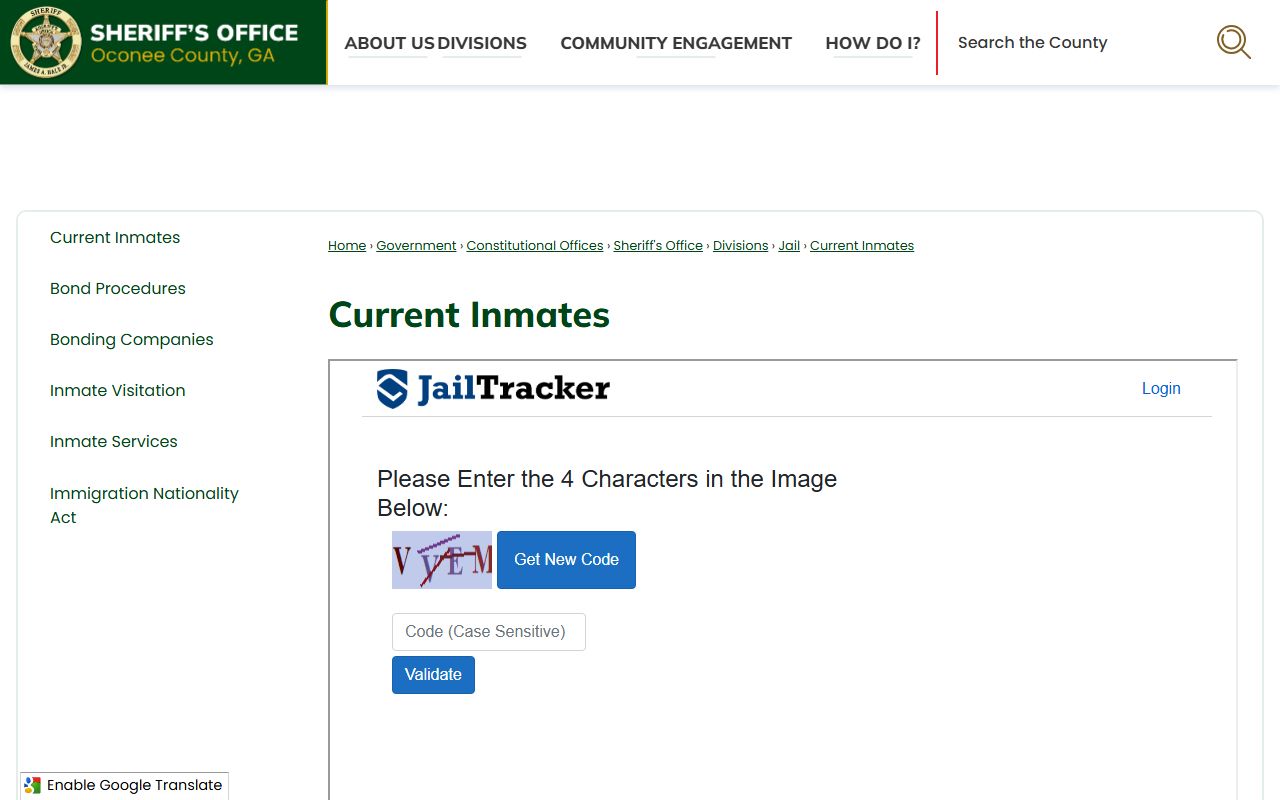
Current custody can show where a person is held, but it should not be used alone to decide the final court outcome.
Bond After Oconee Arrest
Bond information can connect arrest records and court charge records. Oconee jail research identifies property, transfer, cash, and bonding-company paths. A property bond must use improved real estate in Oconee County, cannot use mobile homes, cannot have pending taxes, and must have equity worth at least four times the bond value. Cash bonds require the exact amount because no change is given. Bond conditions or special bond hearings may also appear in the court file.
The jail and court records are still different. Jail operations can answer custody and bond process questions. The court record can show bond orders, bond forfeiture matters, or later conditions set by the judge. The District Attorney may appear in special bond hearings for felony matters.
DA Review of Court Charges
The Western Judicial Circuit District Attorney serves Athens-Clarke and Oconee counties. The office prosecutes felony cases, presents criminal cases before Superior Court judges, represents the State in appeals, advises the grand jury, gives informal legal advice to local law enforcement, and handles preliminary hearings and special bond hearings in Magistrate Court. The DA also operates pretrial diversion and staffs alternative courts.
The Western Judicial Circuit Public Defender represents Clarke and Oconee in most criminal and juvenile cases. It handles Superior Court criminal cases in both counties, delinquency cases, Oconee deprivation cases involving DFCS, and non-traffic misdemeanors plus most serious traffic offenses in Oconee County Probate Court. Those defense records are not a public arrest database, but the office role explains why an attorney may appear as an associated party in a court search.
Probate and Municipal Charges
Not every Oconee County charge after arrest is a Superior Court felony. Probate Court handles misdemeanor traffic offenses, misdemeanor marijuana possession, and underage possession of alcohol offenses. Watkinsville Municipal Court handles city-level citations and municipal matters. A missed court date in a lower court can also lead to a bench warrant or license-related problem, depending on the case type.
Traffic, city citation, and lower-level charge records should be searched through the court that issued or received the citation. Oconee Probate traffic records are not the same as Watkinsville Municipal Court records, and DDS driver records are separate state files.
Sealed vs Expunged Arrest Records
Georgia uses record restriction and sealing for eligible criminal-history and court-record issues. O.C.G.A. 35-3-37 is the main record-restriction statute. Eligible non-convictions and some misdemeanor convictions may qualify under defined rules, but eligibility cannot be assumed from the fact of arrest, dismissal, or age of the case. The arresting agency, prosecutor, or court may be involved depending on the outcome and date.
| Point | Restricted or Sealed | Expunged in Common Speech |
|---|---|---|
| Public View | Limited by statute, agency action, or court order. | Often used to mean removed from public view, but Georgia uses more precise terms. |
| Record Holder | May involve Sheriff's Office, DA, Clerk, Probate, or Municipal Court. | The same holders may still retain records unless an order says otherwise. |
| Effect | May limit dissemination while not destroying all records. | Can wrongly imply total destruction of every arrest or court record. |
| Proof Needed | Arrest date, case number, charge, and final disposition. | The actual restriction or sealing order controls what changes. |
Oconee Arrest Records Channels
Use the right holder for the record. Jail Operations can help with current custody and jail process questions at 706-769-3930. Sheriff's administration can route law-enforcement record questions at 706-769-3945. The Clerk can help with Superior and Magistrate court case records at 706-769-3940. Probate Court can help with county traffic and probate-handled misdemeanor matters at 706-769-3936. Watkinsville Municipal Court can help with city citations at 706-769-5161. DA case status after arrest can route through the Oconee office number or DA main phone listed in the research.
Visitation and inmate services are not proof of court charges, but they are relevant when an arrest has led to jail custody. Oconee uses PaytelConnect for visitation information, JailATM for money services, and Paytel for phone services.
The official Oconee County Jail visitation page documents the PaytelConnect visitation channel.
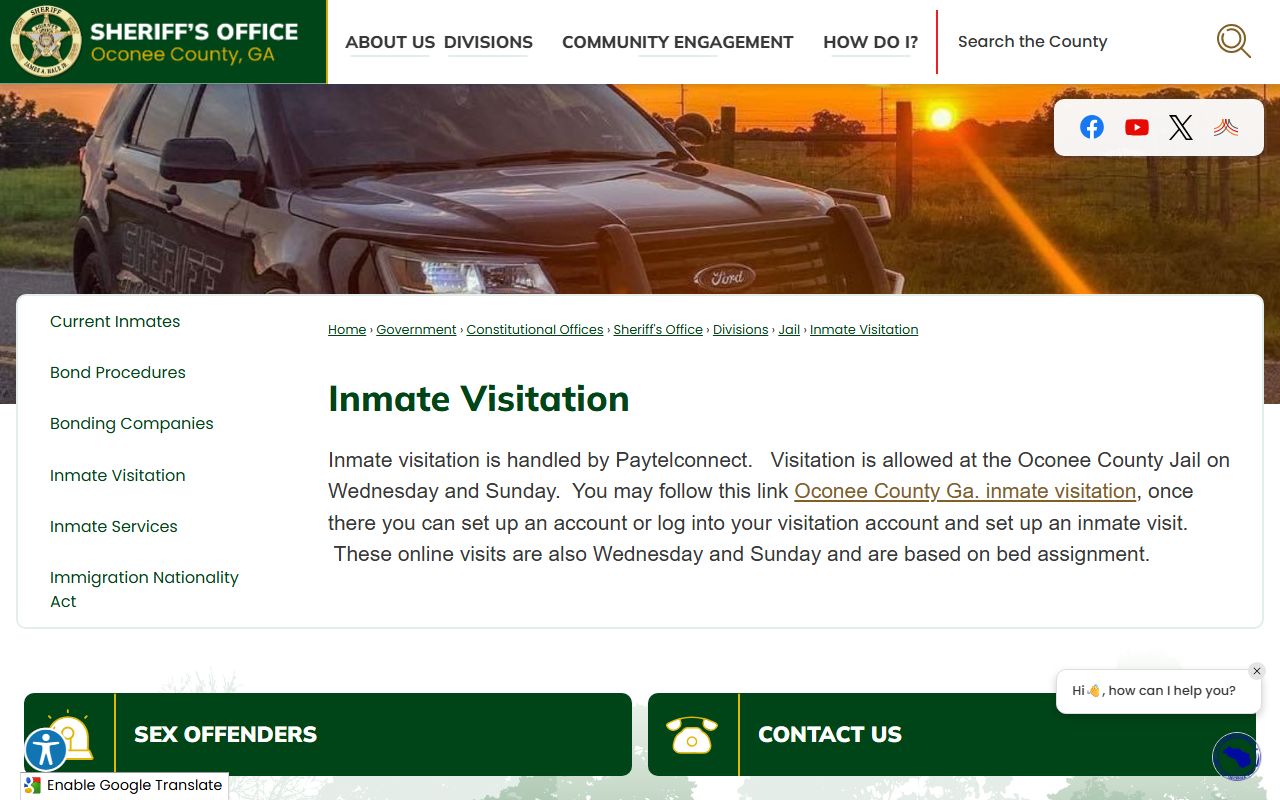
Visitation details help families after an arrest, while charge and disposition details still require court or prosecutor records.
The inmate services page names JailATM and Paytel for money and phone services.
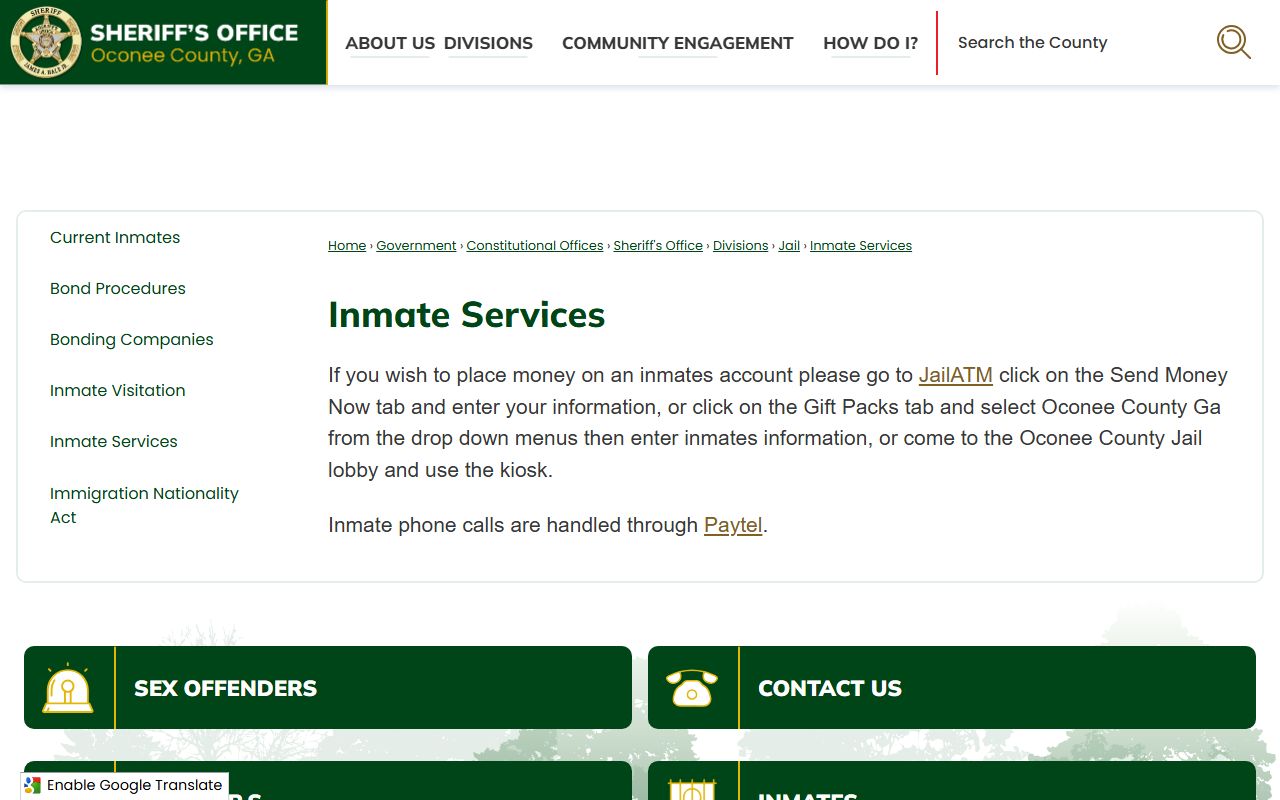
Those jail-service tools do not provide the full charge history, so they should be paired with the docket and Clerk channels.
Background Check Limits
Oconee County arrest records and court charges can be public, restricted, incomplete, or split across several offices. A casual lookup should not be used as a consumer report for employment, housing, credit, insurance, or other FCRA-regulated decisions. For any legal use, request records from the official agency or court and verify the final disposition, sentence, and restriction status.
Important: A booking, charge, or roster entry is not the same as a conviction or certified final court record.